/media/3446521/wyuna-r3600.jpg)
Wyuna
WA
- Sail number
- R3600
- Type
- Jeanneau Sun Fast 3600
- Owner
- Hilary Arthure

/media/3451076/2025-rolex-sydney-hobart-long-range-weather-forecast-credit-cyca-_-ashley-dart-3-1.jpg)
Light and variable winds are shaping as a key feature of this year’s Rolex Sydney Hobart Yacht Race, with early forecasts pointing to a tactical opening phase rather than a flat-out drag race south.
Bureau of Meteorology forecaster Edward Townsend-Medlock said the current outlook for the 80th race, while still subject to high uncertainty, suggests a relatively benign start on Boxing Day, driven by a high-pressure system in the Tasman Sea.
“We’re talking about something that’s seven, eight or nine days ahead of us, so the uncertainty is high,” Townsend-Medlock said. “But there is good consistency in the models around the main features.”
At the race start on December 26, winds are forecast to be light east to south-easterlies in the 5 to 10 knot range. Townsend-Medlock said the strength could vary slightly depending on the exact position of the high, but the general direction appears consistent across models.
An alternative scenario — considered less likely at this stage — could see stronger northerly winds if the high remains west of Tasmania. However, the prevailing outlook in the Cruising Yacht Club of Australia’s 628 nautical mile race, points to lighter conditions in the opening stages.
As the fleet progresses down the New South Wales coast on the first day, the forecast suggests winds may gradually shift toward the north-east and strengthen into the 20 to 25 knot range, though confidence drops significantly beyond the first 24 to 48 hours.
“After that, it’s very difficult to say,” Townsend-Medlock said. “Usually one or two fronts will come through and bring stronger winds in Bass Strait, but that’s well beyond the forecast skill of the models at the moment.”
Sea state is expected to be relatively orderly early, with southerly swells of 1 to 2 metres at periods of 10 to 13 seconds at the start. Townsend-Medlock said the swell is likely to be mature and well-organised, generated far to the south and not especially significant.
Ocean currents may play a larger role, particularly in lighter winds. Several eddies associated with the East Australian Current are forecast to produce north-to-south flows of up to 1.7 knots off the New South Wales coast and east of Tasmania, which could offer gains for boats able to exploit them.
By December 27, conditions in Bass Strait — where the race leaders are typically positioned — are forecast to be light and variable.
“At that time, Bass Strait is looking at light and variable winds, with no major weather feature coming through,” Townsend-Medlock said. “It’s very difficult to say with any certainty what the direction will be.”
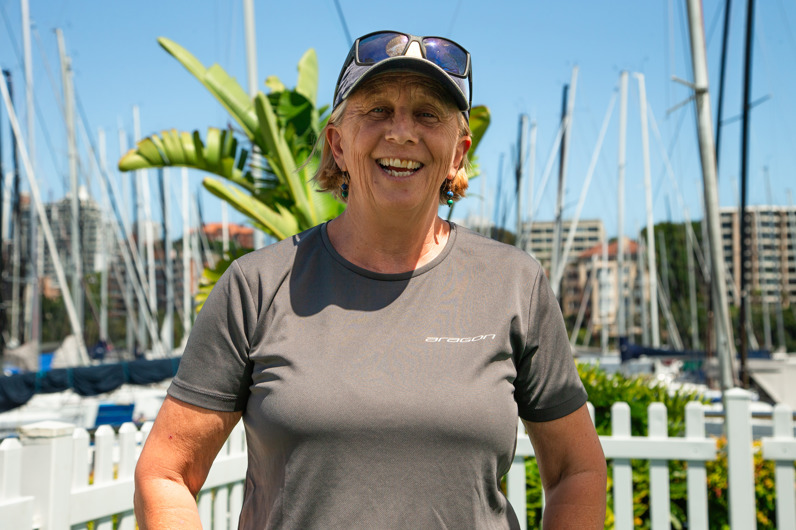
Adrienne Cahalan is the navigator on board Aragon. Image: CYCA/Ashley Dart
Experienced navigator, Adrienne Cahalan, said the prospect of light winds in Bass Strait would place a premium on decision-making rather than raw boat speed.
“That light and variable wind in Bass Strait is going to make it very interesting,” Cahalan said. “It’s going to be a lot of hard work for the navigators.”
Cahalan, who is navigating the Dutch entry Aragon, said the dominance of high pressure early in the race contrasted with last year’s more volatile conditions and could suit a broader range of boats.
“One of the things we’ll be watching very closely is when — or if — a front comes through around the 28th,” she said. “The timing of that could determine a lot of the overall outcomes.”
Alice Tarnawski, one of two navigators on Palm Beach XI, said the evolving forecast would be monitored closely in the lead-up to the start, particularly as the refurbished super maxi returns to the water.
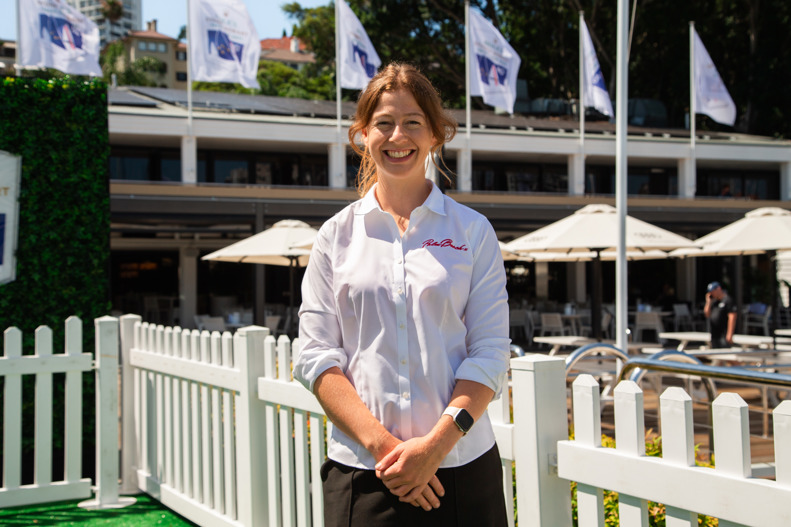
Alice Tarnawski is happy with the long range weather forecast. Image: CYCA/Ashley Dart
“The high-pressure system looks like a pretty ideal situation for us,” Tarnawski said. “If we get a bit of everything, we’re quite hopeful the boat will do well across a range of conditions.”
On board SHK Scallywag 100, Chris Wild, one of two navigators on board, said a lighter forecast turned the race into a strategic contest rather than a straight speed test.
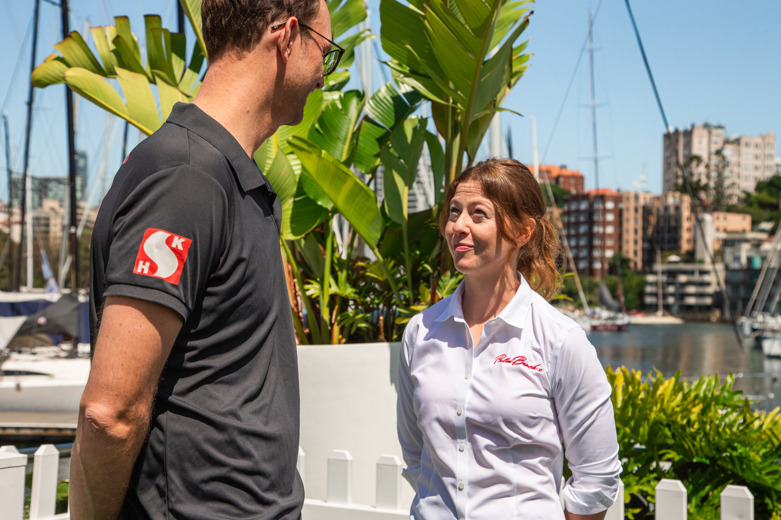
Chris Wild talking weather with Alice Tarnawski. Image: CYCA/Ashley Dart
“In a forecast like this, it’s more of a chess match than a drag race,” Wild said. “Having two navigators helps a lot.”
Wild said lighter conditions could favour slimmer boat designs by reducing drag, but execution would ultimately come down to crew skill.
“When there’s not much wind, it’s really about how well the sailors can get the boat moving,” he said. “That’s where races can be won or lost.”
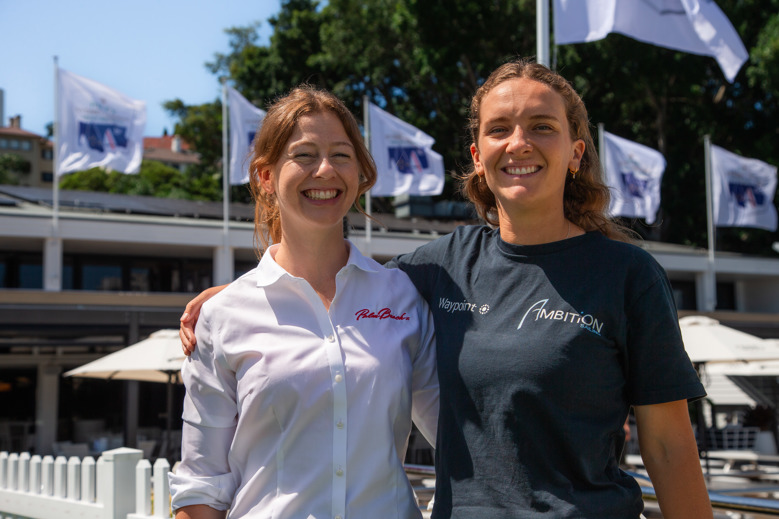
Alice Tarnawski (left) and Clare Costanzo. Image: CYCA/Ashley Dart
For smaller boats further back in the fleet, navigator Clare Costanzo (Ambition) said the longer time on the water meant preparation had to account for multiple systems.
“We’ll probably see two or three weather systems during our race,” she said. “You can’t focus too much on the end of the race on day one — you have to adapt as it unfolds.”
Veteran navigator David Turton, who has almost 20 Hobarts to his name, said experience still mattered most when forecasts became uncertain.
“There’s always a reason why the boats at the front are there,” said Wild Thing 100s Turton. “I’m always watching the barometer, the sky and the set-up. If all else fails, you work it out for yourself.”
With light winds, shifting systems and high uncertainty beyond the first day, this year’s Rolex Sydney Hobart Yacht Race is shaping as a race where patience, precision and navigation may prove as decisive as outright speed.
Steve Dettre/RSHYR media
/media/3450489/hh_rshyr_performance_ads_970x300px3.jpg)